

As of June 1, 2026, the National Transport and Safety Authority (NTSA), in collaboration with the National Police Service, the Judiciary, and the Office of the Director of Public Prosecutions (ODPP), has officially implemented a modernized Minor Traffic Offence Enforcement Framework.
This digital transformation marks a significant shift in how traffic violations are handled across Kenya. For years, the process for managing minor traffic offences often involved tedious court appearances, which consumed valuable time for both motorists and the judicial system. The new framework, authorized under sections 117 and 117A of the Traffic Act, aims to streamline this by allowing for the administrative resolution of these offences.
Whether you drive a personal car, manage a fleet of commercial vehicles, operate a motorcycle, or even a passenger, understanding this system is now a legal necessity to ensure compliance and avoid harsh penalties. Before we dive into the details of the fine schedule, it is vital to ensure your vehicle documentation is current, as some offences are tied directly to registration records. Read our complete guide to NTSA E-Logbooks here to ensure your digital records are up to date and compliant with current NTSA standards.
How the Digital Traffic Fine System Works
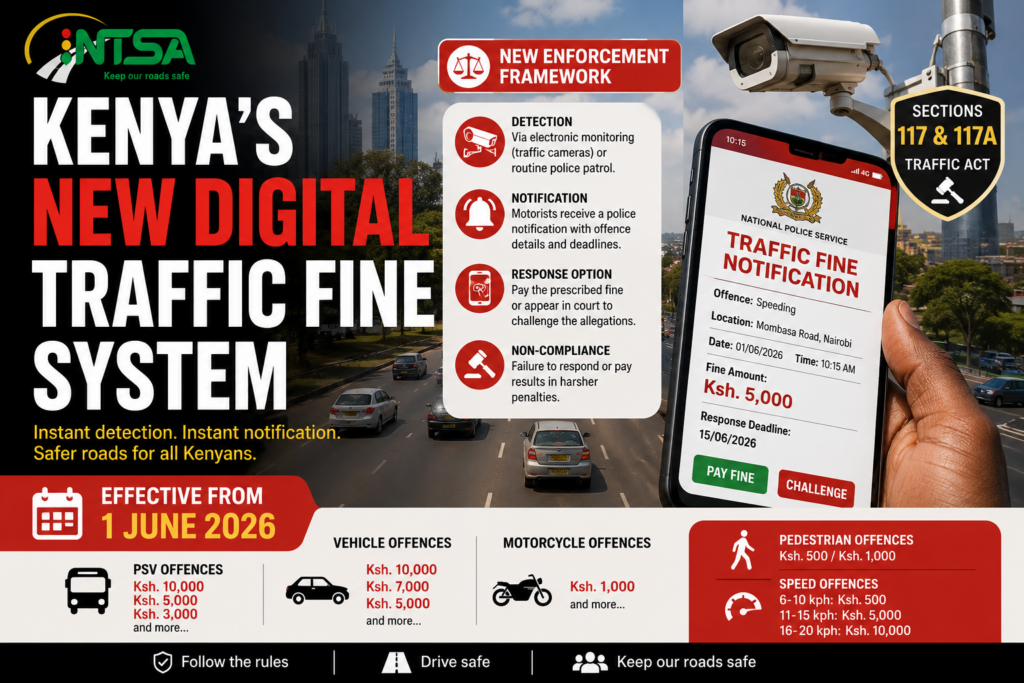
The new framework is designed to move away from the traditional, manual process toward a data-driven, automated system. Here is the process flow:
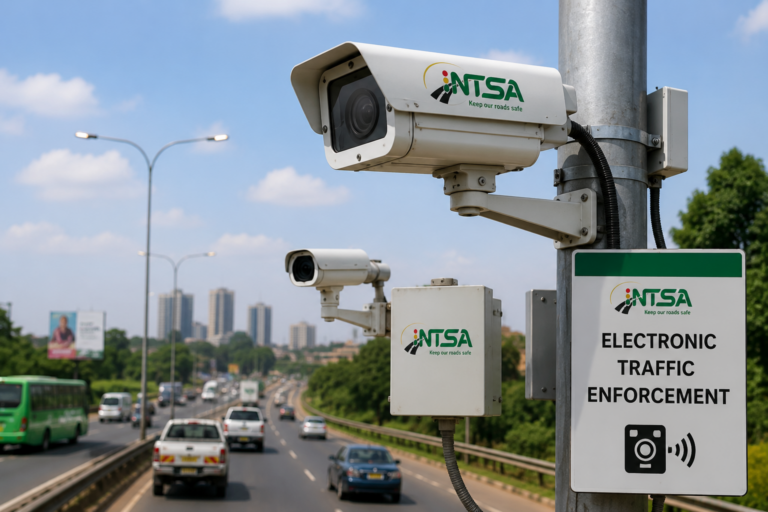
- Detection: Offences are detected either through routine police patrols or, increasingly, through electronic monitoring such as traffic cameras that capture violations automatically.
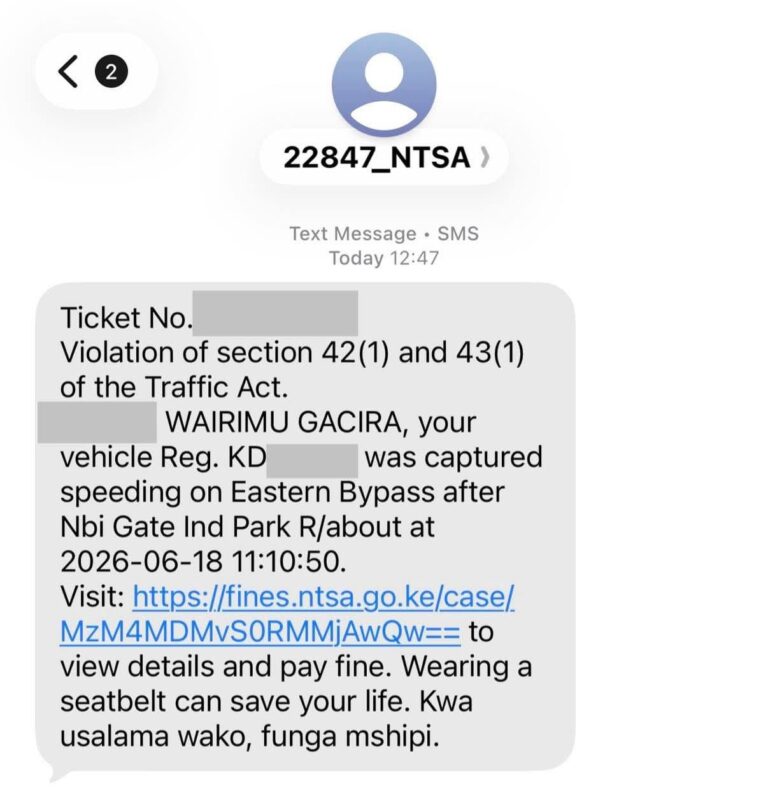
- Notification: Once an offence is detected, the registered owner of the vehicle will receive a formal police notification. This notification contains the specific offence details, the exact location, the prescribed penalty, and a deadline for response.
- Response Option: Upon receiving notification, you have a clear path: either pay the prescribed fine within the stipulated timeframe or, if you disagree with the allegation, opt to challenge it in court.
- Non-Compliance: It is critical to note that failure to respond or pay within the designated period will result in the escalation of the matter, leading to much harsher penalties.
Breakdown of Traffic Offences and Fines
The new system categorizes offences based on the type of vehicle and the nature of the infraction. Below is a simplified breakdown of the penalty structure effective from June 2026:
PSV-Specific Offences
Ksh. 10,000: Failure to fit a speed governor; employing an unlicensed driver/conductor.
Ksh. 5,000: Driving a PSV while unqualified.
Ksh. 3,000: Picking/dropping passengers at unauthorized stops; operating with tinted windows; touting; allowing an unauthorized person to drive; failure to refund fare for an incomplete journey.
Ksh. 2,000: Failure to wear a special badge/uniform; failure to carry functional fire extinguishers/kits.
Ksh. 1,000: Passengers boarding/alighting at non-designated points.
Ksh. 500: Failure to keep seat belts in proper condition.
General Vehicle Offences
Ksh. 10,000: Driving without identification plates; operating without a valid inspection certificate; traffic obstruction by improper vehicle positioning.
Ksh. 7,000: Driving without a valid driving license.
Ksh. 5,000: Driving on pavements/walkways; failing to stop when directed by a police officer.
Ksh. 3,000: Driving without the appropriate license endorsement; failing to obey traffic signs; failing to display lifesavers.
Ksh. 2,000: Driving while using a mobile phone; failure to carry life-savers.
Ksh. 1,000: Failure to renew a driving license; failing to carry/produce a license on demand; learner drivers failing to display “L” plates.
Ksh. 500: Failure to wear a seat belt while the vehicle is in motion.
Motorcycle and Speeding Offences
Motorcycle (Ksh. 1,000): Riding without protective gear.
Pedestrian (Ksh. 500): Willfully obstructing traffic.
Pedestrian (Ksh. 1,000): Travelling with any part of the body outside a moving vehicle.
Speeding:
6–10 kph over limit: Ksh. 500
11–15 kph over limit: Ksh. 5,000
16–20 kph over limit: Ksh. 10,000
Best Practices for Kenyan Motorists
To avoid falling foul of this new system, consider these best practices:
Keep Your Data Updated: Ensure your phone number and email address on the NTSA portal are active. If you fail to receive a notification due to incorrect contact details, you will still be held liable for the fine.
Perform Regular Checks: Frequently log in to your NTSA Service Portal to verify that your vehicle and license status remain clean.
Maintain Your Vehicle: Keep your inspection certificates current and ensure your safety equipment, such as life-savers and seat belts, is functional.
Conclusion
The implementation of the new digital traffic fine system is a major step toward enhancing road safety and promoting accountability in Kenya. While the changes may seem significant, they are essentially designed to reward compliant drivers and ensure that traffic rules are enforced consistently.
The following video provides an excellent summary of the modernised enforcement framework launched by the NTSA, which is directly relevant to understanding the new traffic fine procedures discussed in the article.

Kevin Muya is an award-winning entrepreneur and the visionary Founder and CEO of Scepture Empire Limited. With a passion for e-commerce and digital marketing, Kevin has revolutionized online marketplaces in Kenya through innovative ideas that transform buyer-seller interactions.

